Perimenopause is the transitional stage before menopause, when hormone levels begin to fluctuate and many women start to notice changes such as irregular periods, hot flushes, mood swings, sleep problems and a range of other symptoms. It’s a normal part of ageing, but because the signs can be subtle or develop gradually, many women don’t immediately recognise them.
This guide explains what perimenopause is, common symptoms, how long it lasts, early menopause signs, testing options, and evidence-based perimenopause advice to help you manage this stage more confidently.

What Is Perimenopause?
Perimenopause (also called the menopausal transition) is the period leading up to menopause when the ovaries gradually produce fewer hormones — mainly oestrogen and progesterone.
During this phase, menopausal-type symptoms appear, but periods have not yet stopped completely. Menopause is confirmed only after 12 consecutive months without a period.
When Does Perimenopause Start & How Long Does It Last?
What do the microbiome and menopause have in common?When it usually begins: Most women enter perimenopause in their 40s, typically between 45–50, but it can start earlier or later.
Early perimenopause can start in the late 30s or early 40s
Others may not notice symptoms until 50–55
How long it lasts: Perimenopause is highly individual. It can last:
A few months, or
Several years, most commonly 2–8 years
Perimenopause ends when you have had no period for one full year, marking the start of menopause.
Perimenopause Symptoms
If you’re wondering “How do I know if I’m in perimenopause?”, these are the symptoms women report most often.
- Changes to your period: Irregular cycle, spotting between periods, heavier or lighter bleeding, shorter or longer cycles
- Hot flushes and night sweats: Sudden heat, sweating, flushing or a feeling of overheating — especially at night.
- Mood changes & mental wellbeing shifts: Irritability, anxiety, low mood or depression, brain fog and forgetfulness
- Sleep disturbances: Trouble falling asleep or waking during the night.
- Low libido, vaginal dryness & urinary changes: A drop in oestrogen can cause: Vaginal dryness, discomfort during sex, increased UTIs, changes in bladder sensitivity
- Pelvic or period-type pain: lower abdominal discomfort, stronger cramps, sensitivity during cycle changes
Important: If pelvic pain is severe or bleeding is unusually heavy or frequent, please consult a GP or gynaecologist to rule out other causes such as fibroids or polyps.

How is perimenopause diagnosed?
Is there a perimenopause test? Sadly not! There is currently no single reliable test that can confirm perimenopause.
Diagnosis is usually based on:
Your age
Symptoms
Menstrual pattern
Blood tests (FSH, oestradiol) can be done, but because hormone levels fluctuate daily, results aren’t always conclusive. The focus is usually on symptoms rather than lab tests.
Perimenopause Support
- Hormone Replacement Therapy (HRT): The most effective treatment for hot flushes and many physical symptoms. Not suitable for everyone; your GP will assess personal risks and benefits.
- Antidepressants (specific SSRIs/SNRIs): Can help with hot flushes and mood-related symptoms in some women.
- Local oestrogen treatments: Vaginal creams, gels and pessaries are effective for dryness and urinary symptoms.
- Lifestyle strategies: Regular exercise, balanced diet, quality sleep, stress management
- Probiotics supplements & diet: Natural solutions to relieve symptoms and boost your well-being.
Always consult a healthcare professional before starting any treatment.
Probiotics & Perimenopause: What Does the Research Say?
Current research shows that changes in oestrogen levels during menopause not only affect the vaginal environment (increase in pH, decline in certain lactobacilli), but also the composition of the gut microbiome. This, in turn, can influence oestrogen metabolism (enterohepatic circulation), inflammation markers, metabolic health and even the absorption of phytoestrogens. This raises the possibility that targeted interventions on the microbiome (probiotics, prebiotics, nutrition) may alleviate some symptoms of menopause/perimenopause.
Perimenopause and nutrient intake – study results
During perimenopause, women often suffer from irregular menstruation, hot flushes, mood swings or lack of energy. In addition to hormonal changes, the microbiome also appears to play an important role, influencing nutrient absorption and hormone balance.
One of the most recent studies was led by Prof. B. Schütz at the University of Graz. This study investigated the effects of a multispectral probiotic in postmenopausal women.
Key findings
After just 8 weeks of taking a multi-specific probiotic (with a total content of 1 x 10¹⁰ CFU), there was a significant improvement in all menopausal symptoms. It was particularly impressive that around 60% of women experienced significant relief from hot flushes and fatigue. In addition, the majority of the women affected reported a reduction in muscle and joint pain, improved skin appearance and less hair loss. Other physical complaints such as headaches, palpitations and dry eyes also decreased significantly in most women. Interestingly, more than half of the women also reported an increase in libido.
Improved absorption of micronutrients – vitamins and minerals are crucial for energy and bone health during this period.
It supported hormone balance, which helped alleviate the symptoms of perimenopause and menopause.
Reduced inflammatory reactions – Inflammation can exacerbate hot flushes, fatigue or abdominal pain.
These findings suggest that regular intake of the right probiotic may help alleviate perimenopausal symptoms such as irregular menstruation, spotting, hot flushes and abdominal pain.
🔹 Note: Postmenopausal women participated in the study, but the mechanisms could also be relevant for perimenopause.
Source: Stiegelbauer et al., OM & Nutrition, Vol. 168, pp. 63–67 (2019), University of Graz.
What Is Postmenopause?
Postmenopause is the phase after menopause. Symptoms may persist for a while, but hormone levels remain permanently low. The cycle is no longer regular, and oestrogen and progesterone levels remain consistently low. This period marks the end of the reproductive phase, and the body enters a new hormonal phase that affects not only metabolism, bone density, and cardiovascular health, but also mood, sleep, and general well-being. Postmenopause brings changes to both the body and the mind. Therefore, it is particularly important during postmenopause to maintain a healthy diet, regular exercise, and diverse gut flora. This can improve nutrient absorption and alleviate some of the unpleasant symptoms associated with low hormone levels. Postmenopause lasts a lifetime, but the symptoms usually subside after four to five years.
Practical Perimenopause Advice: What You Can Do Now

- Track your symptoms and menstrual cycle (this can also be useful for a consultation with your doctor).
Speak to your GP if symptoms are unusual or painful.
Discuss HRT if symptoms affect quality of life.
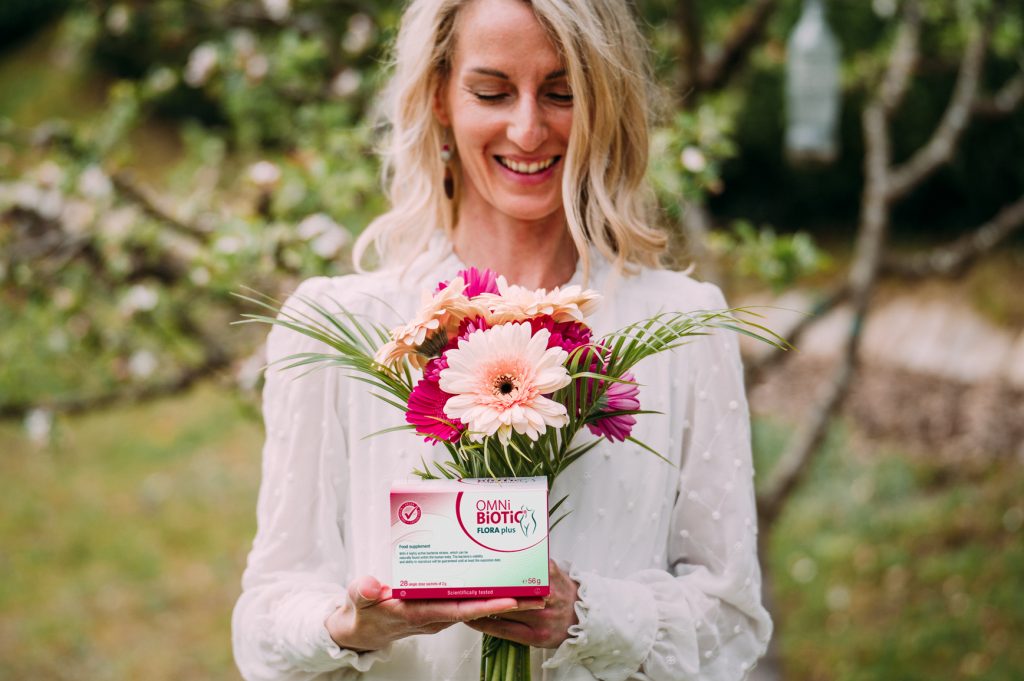
Consider premium, tested probiotics with evidence for women’s health: Select probiotics with study results for specific indications and discuss their use with a doctor or specialist. (Not all probiotics are the same; effectiveness depends on the right combination of strains.)
Maintain a healthy lifestyle: exercise, nutritious eating, sleep, and stress reduction.
Stay informed and talk about your experiences to support other women!
Sources & Further Literature
- NHS Website: Menopause https://www.nhs.uk/conditions/menopause/symptoms/
Review paper: Probiotics and prebiotics:Probiotics and Prebiotics: Any Role in Menopause-Related Diseases? (2023) – Systematic review of the influence of probiotics during menopause (overview of human studies and mechanisms of action). PMC
Colacurci N. et al. – Randomised study: Endometrial, breast and liver safety of soy isoflavones plus Lactobacillus sporogenes in post-menopausal women (Study involving 130 women, improvement in menopausal symptoms through the combination of isoflavones + L. sporogenes). PubMed+1
Review paper: Lactic Acid Bacteria: A Promising Tool for Menopausal Health Management in Women (Nutrients, 2022) MDPI
Stiegelbauer et al., OM & Nutrition , vol. 168, S. 63–67 (2019), Universität Graz. PDF-Studie
Clinical trials / registered trials: NCT04001088 – Study evaluating a probiotic for general menopausal symptoms. ClinicalTrials
- What is the perimenopause?
Perimenopause is the transition phase before menopause, characterised by hormonal fluctuations and changes in the menstrual cycle.
- How long does perimenopause last?
Individual – usually 2–8 years, sometimes shorter or longer.
- Can I get pregnant during perimenopause?
Yes, ovulation continues to occur. Therefore, if you do not wish to become pregnant, use contraception as recommended by your doctor.
- Is spotting normal during perimenopause?
Yes – but if the change is significant or accompanied by pain, a gynaecologist should be consulted to rule out other causes.
- Do probiotics help with menopausal symptoms? Are there specific menopause or perimenopause supplements?
Yes, there is growing evidence that certain targeted supplements, such as probiotics, may help with some symptoms of the menopause.
- Perimenopause Test/Menopause Test? What are the signs of early menopause?
There is no single reliable test to confirm perimenopause. Diagnosis is usually based on age, symptoms and menstrual history.
- How can I tell that I am in a transitional phase? What are low estrogen symptoms?
If you are experiencing irregular periods, hot flushes or mood swings, you may be going through the menopause – have this confirmed by your gynaecologist.
- Menstruation during perimenopause
During perimenopause, menstruation tends to be irregular – it may become shorter, longer, heavier or lighter, or you may experience breakthrough bleeding.
- What is the menopause?
Menopause is the point in a woman’s life when she has gone 12 consecutive months without a period, marking the end of natural menstrual cycles. It happens as the ovaries stop producing oestrogen and progesterone, leading to hormonal changes that can cause symptoms such as hot flushes, irregular periods beforehand, mood changes and sleep disturbances.
- What age does the menopause start?
Menopause usually starts around the age of 50, with the normal range being around 45–55 years. However, depending on genetic and health factors, it can occur earlier or later in every woman.
- What is postmenopause?
Postmenopause is the stage of a woman’s life after her last menstrual period, during which oestrogen levels remain low and the body undergoes a period of hormonal stabilisation.
- How long does postmenopause last? What are postmenopause symptoms?
Postmenopause lasts for the rest of a woman’s life, beginning 12 months after her final period. Most symptoms ease within 4–5 years, but some — especially vaginal dryness, urinary changes and occasional hot flushes — can persist longer due to consistently low oestrogen levels.