
Quality Criteria of Medically Relevant Probiotics & Synbiotics
according to WHO, WGO, FDA, and OePROM standards
Contents
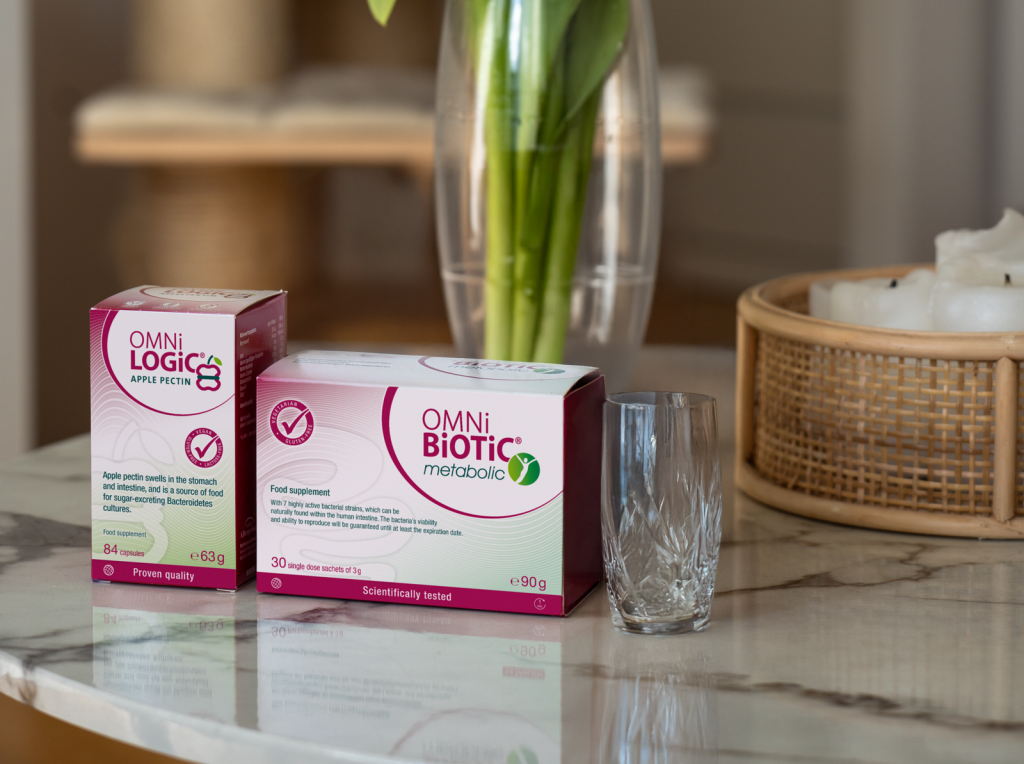
OMNi-BiOTiC® products meet the following quality criteria and consist exclusively of bacterial cultures that occur naturally in human intestines.
1. Safety
All bacterial strains used must have GRAS status, QPS status or comparable safety standards, which indicates the highest safety standard for human ingestion and the absence of side effects even with long-term use.
2. Number of bacteria (CFUs)
Our products contain at least 109 CFU/g (= 1 billion bacteria per gram of powder). This means that a relevant number of viable bacteria are ingested.
3. Activity
Probiotic bacteria are most effective during the first 24 hours after they have been rehydrated, as this is when they become active. In yoghurt production, bacterial activation takes place in the dairy, where yoghurt is made by producing lactic acid from milk. In powder form, this activation process occurs before intake and in our bodies, where the bacteria can actively get to work.
4. Reproductive rate
Proven reproduction of probiotic bacteria even after finishing the course of an OMNi-BiOTiC® product. Evidence of this has only been obtained for very few products until now, as only very high reproduction figures can be recorded. Evidence of this reproduction rate in OMNi-BiOTiC® PANDA, OMNi-BiOTiC® 10 AAD and OMNi-BiOTiC® STRESS Repair has been recorded and published in scientific journals.
5. Resistance to stomach and bile acid
The decisive factor is the stability of the bacteria against strong acids. Revitalising (rehydrating) the freeze-dried bacteria outside the body in a liquid has proven to be the best method. Still water, low-acid fruit juices, milk or even yoghurt and muesli are suitable for this. Do not mix with citrus juices, coffee, alcohol, carbonated or hot drinks (over 40°C). In the chosen liquid, the bacteria can absorb food and become (metabolically) active before they have to survive the passage of several hours through the stomach with its gastric acid and through the duodenum with bile acid and pancreatic secretions.
6. Stability at room temperature
The number of bacteria guaranteed present upon the best-before date is given, not the number of bacteria at the time of packaging. This is because many bacteria may already die after a few days if the environment does not meet the ideal conditions for survival. Upon request, a quality analysis of every OMNi-BiOTiC® product batch can be provided, including evidence of stability at room temperature for 24 months.
7. Milieu optimisation
The ideal pH value in the small intestine is between 4.0 – 5.0. This environment is optimal for the reproduction of beneficial bacterial, however, not ideal for pathogens.
8. Multi-species formula of symbiotic bacterial strains
Scientific evidence suggests that the targeted combination of several bacterial strains is superior to the administration of a single strain for a variety of applications. The potential of the individual strains can be further increased through optimised combinations in multispecies formulations.
9. Synergy of bacterial strains
Not all bacterial strains get along well and they can also compete (e.g. for food), so the synergy of mixed bacterial preparations must be proven by a so-called “cross streak” method, or studies on efficacy should be available.
10. Free from sugar, gluten and animal protein
To avoid promoting existing intolerances.
11. Matrix
The bacterial reproductive rate and activity can be increased by adding enzymes, fibre, and minerals to the product’s composition. The mucus production of the intestinal lining is increased as well as the adhesion of the bacteria which has been ingested.
12. Studies on effectiveness
The effectiveness of probiotics should be proved through scientific studies on humans.